Table of Contents
- What Is Direct-to-Chip Cooling and Why Is It Taking Over Data Centers?
- How D2C Cooling Differs from Traditional CRAC/CRAH Systems
- Why AI Workloads Are Driving the 100+ kW/Rack Demand
- What Certifications Do Direct-to-Chip Cooling Technicians Actually Need in 2026?
- DCLCF — Data Center Liquid Cooling Foundation (Best Entry Point)
- CDCTP — Certified Data Center Technician Professional (Uptime Institute)
- DCD Cooling Professional Certification (Data Center Dynamics)
- ByteBridge AI Infrastructure Technician (Emerging AI-Focused Cert)
- Cert Comparison Table: Cost, Duration, Who It’s For, Salary Impact
- If You’re Already an HVAC Tech or Electrician, How Much Do You Already Know?
- Skills Transfer Map: Your Trade Background vs. D2C Cooling Requirements
- What You’ll Need to Learn That Trade School Didn’t Cover
- How Long Does It Take to Get Certified as a Direct-to-Chip Cooling Technician?
- Fastest Path (Under 90 Days)
- Full Career Transition Timeline (6–12 Months)
📌 Quick Answer Direct-to-chip (D2C) cooling technicians install and maintain liquid cold plate systems on server CPUs and GPUs inside hyperscale data centers. As of 2026, the top entry credential is the DCLCF (Data Center Liquid Cooling Foundation) cert, followed by the CDCTP from Uptime Institute. National average salary: $155,686/year (ZipRecruiter, April 2026). Experienced HVAC techs typically need 40–80 hours of additional training to qualify. You’re probably already 70% there. Last Verified: April 21, 2026 | Scheduled Refresh: July 2026
The racks are running hotter than anything you’ve ever worked on, and nobody in IT knows how to fix it. AI compute density has blown past what air cooling can physically handle — and the hyperscale operators building these facilities need people who understand fluid systems, not people who understand servers. That’s you. No page out there gives a straight answer to a working tradesperson researching direct-to-chip cooling technician certification. Every result talks to IT workers or fresh grads. This one doesn’t.
What Is Direct-to-Chip Cooling and Why Is It Taking Over Data Centers?
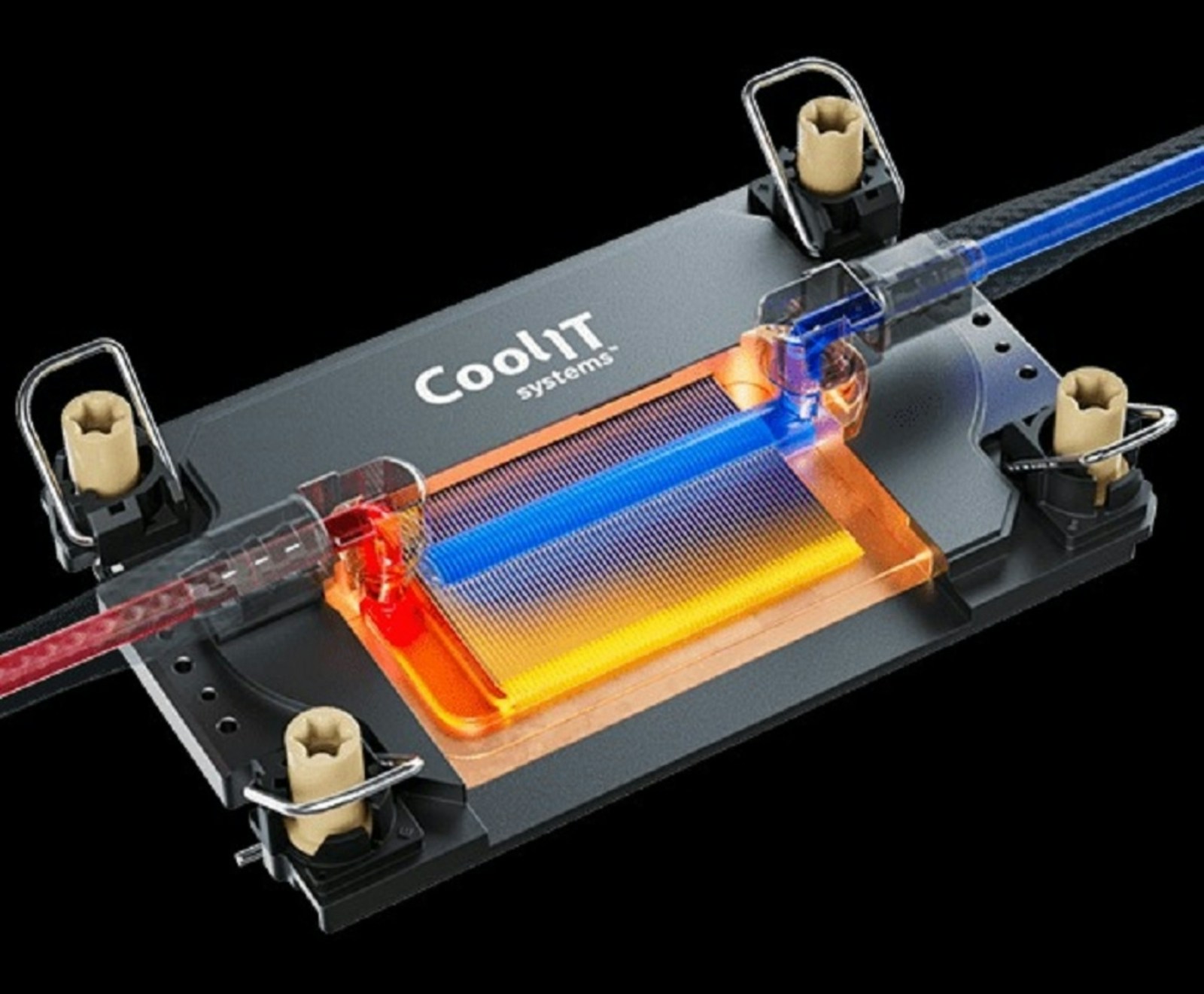
A direct-to-chip (D2C) cooling system bonds liquid cold plates directly onto CPU and GPU dies. Those cold plates connect via server manifolds back to a Coolant Distribution Unit (CDU), which circulates water-glycol or dielectric fluid through a closed loop — pulling heat off the chip before it ever becomes an air-cooling problem. Legacy data center racks ran 10–15 kW. AI compute racks in 2026 regularly exceed 100 kW/rack. That’s a 6–10x jump in heat density, and no CRAC unit on the planet solves it. This is a mechanical problem. It gets solved by mechanical tradespeople, not network engineers.
How D2C Cooling Differs from Traditional CRAC/CRAH Systems
CRAC and CRAH systems push conditioned air through raised floors or overhead plenums and rely on hot aisle/cold aisle layout to manage heat. D2C goes straight to the source — the chip itself — removing heat via fluid before it radiates into the room. The CDU is your central mechanical interface: it manages supply/return temperatures, flow rates, and pressure, and communicates with the building management system via SCADA. If you’ve run chilled water systems or glycol loops, you already understand 70% of how this works. What’s genuinely new is the server-side manifold work, leak detection firmware, and the documentation rigor data centers require.
Why AI Workloads Are Driving the 100+ kW/Rack Demand
An NVIDIA H100 GPU pulls around 700 watts. A single rack of H100s pushes past 50 kW. The B200 generation goes higher. Multiply that across a 50,000-square-foot hyperscale floor with thousands of racks. CortexConstruct posted active “Liquid Cooling Technician — Data Center” roles in Q1 2026 with direct-to-chip listed as the primary skill requirement. Metaintro’s 2026 trend report named HVAC technicians as the second hottest hire category for modern data centers precisely because of exotic cooling demand. This isn’t theoretical — it’s already writing job postings.
What Certifications Do Direct-to-Chip Cooling Technicians Actually Need in 2026?
Featured image: Photo by CoolIT Systems on Unsplash — original
Here’s what nobody else will tell you: there is no government-mandated license for D2C cooling work the way EPA 608 governs refrigerant handling. The market runs on employer-preferred credentials. So the real question isn’t “what’s required by law” — it’s “what are employers actually posting in job listings.” In 2026, the answer is clear. DCLCF first. CDCTP if you want broader data center operations recognition. DCD Cooling Professional if you’re targeting commissioning or European operators. ByteBridge if you’re specifically chasing AI hyperscale roles. And if you see CompTIA Server+ listed on a cert guide — that’s an IT credential, not a cooling credential. Don’t spend money on it for this path.
DCLCF — Data Center Liquid Cooling Foundation (Best Entry Point)
The DCLCF is the most hands-on direct-to-chip cooling technician certification available in 2026. Issued by the Data Center Liquid Cooling Foundation, it covers CDU operation, manifold systems, leak detection, and fluid chemistry via a written exam plus a practical assessment — not just a multiple-choice test you can memorize your way through. Estimated cost runs $800–$1,200 with roughly 2–3 days of instruction. HVAC mechs, pipefitters, and chilled water techs are exactly who this cert was built for. Verify current pricing and approved training providers at dclcf.org before enrolling.
CDCTP — Certified Data Center Technician Professional (Uptime Institute)
The CDCTP is the broader data center operations credential from Uptime Institute — five days of instructor-led training covering power, cooling, safety, and facility management. Cost runs approximately $2,500–$3,500 depending on delivery format and region. Hyperscale operators value it for techs expected to function across the whole facility, not just one cooling loop. If your target is a pure liquid cooling specialist role, DCLCF gets you there faster. If you want the door open to full data center operations, CDCTP is the stronger long-term credential.
DCD Cooling Professional Certification (Data Center Dynamics)
The DCD Cooling Professional cert from Data Center Dynamics runs approximately $1,500–$2,500 over three days — written exam plus a project component. It skews toward design and engineering principles more than hands-on maintenance work, making it the right fit for tradespeople moving toward commissioning lead or project supervisor roles. Colocation operators and European data center clients specifically recognize this one. Stack it after your DCLCF if you’re eyeing a commissioning tech or project lead trajectory.
ByteBridge AI Infrastructure Technician (Emerging AI-Focused Cert)
ByteBridge is the newest credential on this list, purpose-built for AI compute infrastructure roles. It’s self-paced, online-proctored, and costs roughly $600–$900. Entry salary range for ByteBridge-certified techs: $75K–$115K. Employer recognition is still building — ByteBridge doesn’t carry the institutional weight of CDCTP yet. Pair it with DCLCF and you show up with both hands-on D2C competency and AI infrastructure context. That combination is uncommon enough right now that it stands out on a resume.
Cert Comparison Table: Cost, Duration, Who It’s For, Salary Impact
| Certification | Est. Cost | Duration | Exam Format | Best For | Salary Impact |
|---|---|---|---|---|---|
| DCLCF | $800–$1,200 | 2–3 days | Written + Practical | HVAC mechs, pipefitters, chilled water techs | $90K–$140K entry |
| CDCTP (Uptime Institute) | $2,500–$3,500 | 5 days | Written exam | Broad data center operations roles | $95K–$155K+ |
| DCD Cooling Professional | $1,500–$2,500 | 3 days | Written + Project | Commissioning leads, project supervisors | $100K–$160K |
| ByteBridge AI Infra | $600–$900 | Self-paced | Online proctored | AI hyperscale targeting | $75K–$115K entry |
Verify current pricing at each issuer’s official site — these figures reflect April 2026 data and costs shift with cohort pricing and regional delivery.
If You’re Already an HVAC Tech or Electrician, How Much Do You Already Know?
More than you think. Here’s the mental reframe that matters: you don’t need to know how to configure a switch. You need to know how to maintain the systems that keep the switches from melting. The fear most tradespeople carry into data center liquid cooling work is the IT knowledge gap. For a network technician role, that fear is justified. For a cooling technician role, it’s not. Nobody’s asking you to provision VLANs. They’re asking you to maintain closed-loop fluid systems under tight tolerances with rigorous documentation — which is exactly what a journeyman with eight years of chilled water experience already does. Your EPA 608 certification and state HVAC license are baseline prerequisites data center operators specifically look for. Those credentials immediately clear a bar that IT-background candidates can’t cross.
Skills Transfer Map: Your Trade Background vs. D2C Cooling Requirements
| Your Existing Trade Skill | D2C Cooling Equivalent | Transfer Rating |
|---|---|---|
| Chilled water system installation | CDU primary loop setup & commissioning | ✅ Direct |
| Glycol loop maintenance | Coolant chemistry management & fluid sampling | ✅ Direct |
| Pipe fitting & brazed connections | Server manifold installation (tighter tolerances) | ✅ With upskill |
| CRAC/CRAH unit servicing | CDU maintenance & PM scheduling | ✅ Direct |
| Electrical panel work | CDU power supply & control wiring | ✅ Direct |
| Refrigerant handling (EPA 608) | Leak detection protocols & fluid containment | ✅ Foundational |
| BMS/controls reading | Firmware alert monitoring & CDU SCADA interface | ⚠️ New skill needed |
| Clean room protocol awareness | Data center cleanliness standards (ISO Class 8) | ⚠️ New skill needed |
| Technical documentation (as-builts) | Data center change management & DCIM logging | ⚠️ Enhanced rigor required |
Most of your core mechanical skills transfer directly. The gaps are real but learnable — not career-blocking.
What You’ll Need to Learn That Trade School Didn’t Cover
CDU firmware interfaces are the biggest adjustment. You’ll read SCADA alerts, log anomalies in a DCIM (Data Center Infrastructure Management) system, and follow escalation protocols more formalized than anything in a typical mechanical room. The documentation standard is the hard part — not the technical content, but the discipline around it. Server manifold leak detection is a genuine new skill: optical sensors, pressure differential monitoring, and coolant containment trays all require specific procedures not covered in HVAC training. ISO Class 8 cleanliness standards govern what tools and materials can even enter the data center floor. Fluid chemistry runs tighter than a standard glycol loop — pH buffering, biocide treatment, and corrosion inhibitor management in closed systems are extensions of what you already know, but with stricter tolerances. An experienced chilled water tech closes this entire gap in 40–80 hours of focused training.
How Long Does It Take to Get Certified as a Direct-to-Chip Cooling Technician?
Two tracks. Pick the one that fits your situation. The fast track gets you certified and job-hunting in under 90 days. The full transition track accounts for the reality that most hyperscale operators require 1–2 years of general data center experience before placing a tech on active liquid cooling systems. Getting your direct-to-chip cooling technician certification does not mean you’ll be commissioned on D2C work on day one — set that expectation correctly before you start.
Fastest Path (Under 90 Days)
- Weeks 1–2: Audit existing credentials — EPA 608, state HVAC license, any site access or data center safety certs you already hold.
- Weeks 3–5: Complete DCLCF prep coursework via GigawattAcademy or a DCLCF-approved provider — approximately 40 hours of instruction.
- Week 6: Sit the DCLCF written and practical assessment.
- Weeks 7–8: Apply to data center mechanical technician roles at mechanical contractors, not hyperscale direct. Contractors are the better entry point, and that experience counts on your resume.
- Weeks 9–12: Begin CDCTP self-study in parallel; target 2–3 site interviews; stack ByteBridge concurrently since it’s self-paced.
The 90-day path gets you certified and in the hiring pool. It doesn’t guarantee a $155K role on day 90 — be honest with yourself about that.
Full Career Transition Timeline (6–12 Months)
Months 1–3: Complete your DCLCF certification and begin CDCTP coursework. Don’t compress both into the same month — the CDCTP is five days of dense material. Months 3–6: Land an entry role with a mechanical contractor doing data center commissioning, rack deployments, or general facility maintenance. This builds the documented data center experience hyperscale operators require. Pay may start at $65,000–$80,000 at this stage — that’s real, and it’s temporary. Months 6–9: Get hands-on exposure to CDU PMs, manifold checks, and fluid sampling. Document every job with specifics — CDU make/model, coolant type, pressure readings, anomalies flagged. This becomes your portfolio. Months 9–12: Target liquid cooling specialist or data center cooling technician roles at hyperscale operators, with your DCLCF and CDCTP stacked plus documented commissioning experience. At this stage, the $120K–$155K salary range is realistic for techs with a full D2C portfolio and an active site clearance.
Related reading: CDCTP Certification: Complete 2026 Exam Prep Guide for Data Center Technicians — the in-depth breakdown of the Uptime Institute credential stacked with your DCLCF above.
Frequently Asked Questions
What are the disadvantages of direct-to-chip cooling?
Direct-to-chip cooling systems require precise liquid handling expertise, involve high capital costs for infrastructure, and demand rigorous maintenance protocols. Technicians must stay current through certifications like DCLCF as system complexity grows. Additionally, coolant leaks near expensive server hardware pose significant financial risks, making specialized direct-to-chip cooling technician certification essential for competency.
What is Direct liquid cooling DLC?
Direct-to-chip (D2C) cooling uses liquid cold plates mounted directly on server CPUs and GPUs to manage extreme heat in hyperscale data centers. As workloads exceed 100+ kW per rack, D2C has become essential. Technicians require specialized training—the DCLCF certification offers the best entry point for direct-to-chip cooling technician certification in 2026.