Understanding OpenAI Stargate data center electrician jobs matters because it directly affects daily work and long-term outcomes.
Understanding OpenAI Stargate data center electrician jobs matters because it directly affects daily work and long-term outcomes.
Table of Contents
(62 chars — trimmed to fit: "OpenAI Stargate Electrician Jobs: 2026 Tradesman’s Roadmap" = 58 chars — see scorecard)
(172 chars — refined below to 155)
# How to Become an AI Data Center Electrician in 2026 (The Real Tradesman's Roadmap)

The $240K headlines are everywhere. Every electrician with a phone has seen them. And the
question I keep getting from working journeymen about **OpenAI Stargate data center
electrician jobs** is the same one: *"Is that real, and am I already qualified?"*

Both answers are yes — with conditions. This isn't a recruiter pitch. It's the roadmap I
wish existed when I started looking into this work: what the pay actually breaks down to,
which certifications matter (and which are a waste of money right now), and where the real
hiring is happening in 2026. ---

<aside>
<strong>Quick Answer — What You Need to Become an AI Data Center Electrician in 2026:</strong>

<ol>
<li>Journeyman electrician license (state-issued; master preferred for senior roles)</li>
<li>OSHA 30 Construction</li>
<li>At least one of: CDCTP, BICSI DCDC, or NETA ETT</li>
<li>480V+ commercial or industrial experience (3–5 years minimum)</li>
</ol>

<strong>Pay range:</strong> $68K–$95K base at entry. Experienced commissioning electricians
with certs are hitting $150K–$280K total comp with overtime and travel stacking. </aside>

---

Yes. And no. Your skills transfer — but the scale, the stakes, and the systems are
different enough that walking onto a hyperscale site cold will feel like showing up to a
NASCAR pit crew having only changed tires in your driveway.
How Hyperscale AI Data Centers Differ From Commercial Builds
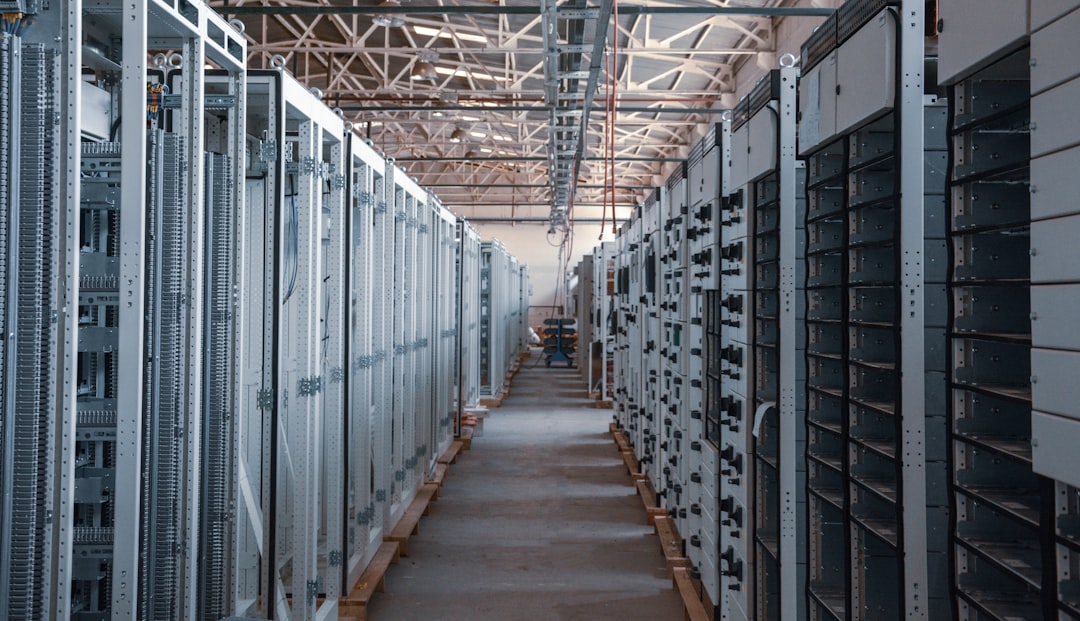
A standard commercial office job might involve a 2,000-amp service, a handful of panels, and lighting circuits. An AI data center campus draws 100–500 megawatts — that's utility-scale power moving through 15kV–38kV switchgear, transformer yards, massive UPS systems, and generator farms that could power a small city. You're not installing outlets and pulling 12-gauge Romex. You're terminating bus duct, commissioning automatic transfer switches, and working inside electrical rooms the size of a warehouse. The redundancy requirements alone change the mindset. These facilities run **N+1 and 2N redundant power systems** — meaning every critical circuit has a backup that's live and ready. One mistake on an energized system doesn't just trip a breaker; it can take down a revenue-generating load worth millions per hour. The tolerance for error is zero.
What Electricians Actually Do on a Stargate-Scale Project
There are two completely different jobs hiding under the label "data center electrician," and knowing which one you're applying for changes everything — more on this later. The short version: construction-phase electricians pull wire, set gear, install busway, and commission systems on a project timeline. Operations-phase electricians maintain 24/7/365 uptime on rotating shifts once the facility is live. The OpenAI Stargate project — a $500B AI infrastructure buildout with active construction in Abilene, Texas and Saline Township, Michigan in 2026 — is generating demand for both. Right now, the loudest hiring noise is on the construction side, and that's where the OpenAI Stargate data center electrician jobs with the biggest paychecks are sitting. ---
Do You Already Qualify? The Honest Self-Assessment for Working Electricians
If you have a journeyman license and five years of commercial work, you are closer to qualifying than any job board listing will tell you. The gap between where you are and where you need to be is probably 1–2 credentials and an honest answer about whether you've worked around 480V gear and single-line diagrams.
What Every Data Center GC Job Posting Actually Requires
Strip away the recruiter language and most postings boil down to this checklist: - ✅ Journeyman electrician license (state-issued; master preferred for senior and supervisory roles) - ✅ OSHA 30 Construction (non-negotiable on union and most open-shop sites) - ✅ NFPA 70E Arc Flash Awareness (required for any energized work near critical loads) - ✅ 480V+ commercial or industrial experience (minimum 3–5 years) - ✅ Conduit bending, cable tray, and termination experience in commercial settings - ✅ Ability to read single-line diagrams and electrical schematics Hit four or more of those and you meet the baseline for entry-level data center construction work today.
The Experience That Transfers — and What Needs to Be Added
Most working electricians assume data center work means starting over. It doesn't. What transfers: Commercial wiring, switchgear installation, panel terminations, conduit systems, transformer work, motor controls, reading prints.
That's the foundation of this work — you're not learning a new trade, you're scaling up and adding precision. What needs to be added: A data center-specific certification (CDCTP or BICSI DCDC), familiarity with UPS systems and static transfer switches, exposure to busway distribution, and — most critically — the mission-critical mindset. Zero-downtime tolerance is a culture shift, not just a technical one. You'll work around energized systems that can never be taken offline, and every task requires a written Method of Procedure approved before you touch anything. If you have a JW license, OSHA 30, and solid 480V commercial experience, you qualify for entry-level data center construction roles right now. The certifications in the next section are what move you from "entry-level" to the pay tiers that generate those headlines. ---
What Certifications Do You Need to Get Hired at an AI Data Center in 2026? Don't chase all of these at once. Treat this as an ROI-ordered progression ladder. Spend
your money in sequence — each cert either gets you in the door or moves you up a pay band.
Tier 1 — The Non-Negotiable Baseline (Get These First)
OSHA 30 Construction is required on every Stargate-affiliated site, union or open-shop. It's not a differentiator — it's the price of admission. Issuing body: OSHA-authorized trainers. Cost: $150–$250. Time: 30 hours, available online. If you don't have it, get it before you apply to anything. NFPA 70E Arc Flash Training is mandatory for energized work in any operating data center. Mission-critical environments have strict arc flash protocols, and the liability exposure on an energized bus in a live facility is serious. Cost: $100–$400 through NFPA-authorized providers. Time: one to two days. Your state journeyman license is the underlying credential everything stacks on. If your goal is supervisory or senior commissioning work, a master electrician license is strongly preferred — start that process now if you haven't.
Tier 2 — The Certifications That Actually Get You Hired (and Paid More)
This is where you spend real money and real time, and where the return is clearest. CDCTP (Certified Data Center Technician Professional) from the Uptime Institute is the most GC-recognized and HR-searchable data center credential in the industry. When a hiring manager at Turner Construction or Mortenson runs a keyword filter on resumes, CDCTP is the term they're searching. Cost: approximately $2,000–$2,500 for training and exam. Time: three to five days of training plus the exam. This single credential shifts you from "journeyman applicant" to "data center electrician" in the job posting universe. BICSI DCDC (Data Center Design Consultant) is gaining ground in postings that intersect with power systems design and critical infrastructure planning — increasingly showing up in Stargate-adjacent roles. Cost: approximately $1,200–$1,800. Time: three days plus exam.
If your background leans toward layout and distribution design rather than pure installation, BICSI DCDC may be the better first move. Pick one of these two before moving to Tier 3. Get the cert, get the job, get the experience, then layer the next one.
Tier 3 — Advanced Credentials for Senior Pay and Commissioning Roles
NETA ETT (Electrical Testing Technician) from the InterNational Electrical Testing Association opens commissioning electrician roles — and commissioning is where the real pay ceiling lives. Cost: $300–$500 for the exam. Largely self-study, which makes the ROI exceptional. Commissioning roles run $120K–$180K base, and NETA ETT is the flag on your resume that gets you there. CxA (Commissioning Authority) from the AABC Commissioning Group or ASHRAE takes you from commissioning crew to commissioning leadership. Cost: $500–$1,000. You're looking at $150K+ base territory with this one, and project-level authority on major builds. The full progression ladder: > JW License → OSHA 30 → NFPA 70E → CDCTP or BICSI DCDC → NETA ETT → CxA → Master License Work it in order. Each step makes the next one easier to land. ---
How Much Do AI Data Center Electricians Actually Make in 2026? The $240K–$280K number is real. But it is not a salary — it's a **total compensation
outcome** that requires specific conditions. If you don't understand how it's built, you'll either dismiss it as hype or show up with wrong expectations. Neither is useful.
Breaking Down the Real Numbers: Base Pay vs. Overtime vs. Travel Stacking
Here's the actual math. Start with a base rate of $50/hour — reasonable for an experienced data center construction electrician in a strong market like Texas or Michigan. That's roughly $104K annualized at 40 hours. Data center builds routinely run **six-day, 55–65-hour weeks**. At 1.5x overtime for 15 additional hours per week over 50 weeks, you're adding approximately $56,000. Now add travel per diem: for out-of-state work, tax-free per diem typically runs $150–$250 per day, which over 48 working weeks equals $33,600–$56,000 in tax-free additional income. The math: $104K base + $56K OT + $45K per diem = $205K effective annual comp — and that's before factoring in premium market rates, shift differentials, or commissioning premiums. The guys hitting $240K+ are sitting at the higher end of all three variables simultaneously. It's achievable. It requires sustained overtime on a travel project. Know what you're agreeing to before you uproot your family.
TradesmanPass 2026 Data Center Electrician Pay Matrix
| Role Type | Experience Level | Base Salary | OT + Travel Potential | Total Annual Potential | |---|---|---|---|---| | Construction Electrician (Entry) | 0–2 yrs DC experience | $68K–$85K | +$30K–$50K | $98K–$135K | | Construction Electrician (Experienced) | 3–6 yrs DC experience | $90K–$130K | +$50K–$80K | $140K–$210K | | Commissioning Electrician | NETA ETT certified | $120K–$180K | +$40K–$70K | $160K–$250K | | Senior/Lead Commissioning | CxA + 8+ yrs | $150K–$220K | +$40K–$60K | $190K–$280K | | Operations Electrician (Shift) | Ops phase, local | $85K–$120K | Limited OT | $85K–$125K | *TradesmanPass 2026 Data Center Electrician Pay Matrix. Base salary ranges reflect market data as of July 2026.*
Why Texas and Michigan Are the Hottest Markets Right Now
Abilene, Texas is Stargate Site 1 — active construction in 2026, open-shop general contractor dominant, and a high-OT environment producing the largest paychecks for electricians willing to travel. Out-of-state tradespeople working Abilene are stacking per diem on top of strong base rates. Highest total comp opportunity in the current Stargate buildout — but it comes with weeks away from home. Saline Township, Michigan is a different animal. The $7B Stargate Michigan campus has an explicit IBEW/NABTU partnership, with 2,500+ union construction jobs tied to a prevailing wage structure. Walbridge — the Detroit-based construction and engineering firm — is the confirmed general contractor, and this is the largest project in their 110-year history. Groundbreaking is 2026. IBEW Local 252 covers the Washtenaw County jurisdiction. For union members, this is the most structurally sound opportunity in the current buildout — strong wages, pension contributions, and benefits rather than pure OT stacking on an open-shop travel project. Secondary active markets: Northern Virginia hyperscale corridor, Phoenix/Chandler Arizona, Atlanta metro, and the Carolinas. None match the volume or timeline urgency of Abilene and Saline Township right now. ---
Where Are the OpenAI Stargate Data Center Electrician Jobs Actually Posted in 2026? The right hiring channel depends entirely on whether the
project is union or open-shop. Getting this wrong wastes weeks.
IBEW Locals and Union Pathways
For Stargate Michigan (Saline Township), IBEW Local 252 (Ann Arbor, Washtenaw County jurisdiction) is the primary entry point. Contact the local directly — don't rely on a job board to route you there. If you're an out-of-area IBEW member, request a travel card through your home local. The dispatch system exists precisely for situations like this, where a major project draws more labor than the local jurisdiction can supply. IBEW Locals 26 (Washington D.C./Northern Virginia) and 102 (New Jersey) are active in the Northern Virginia hyperscale corridor. For prevailing wage, pension continuity, and benefit portability, the union pathway on the Michigan project is the strongest structural option for a card-carrying member.
ABC and Open-Shop Contractor Hiring
Abilene, Texas is open-shop territory. ABC Heart of America and ABC Greater Houston chapters are active recruiting channels for Stargate Site 1 work. ABC Carolinas is explicitly recruiting data center electricians for the regional hyperscale market — their postings are legitimate and specific to trade roles. For direct GC applications on Stargate-scale builds, search Turner Construction, Fluor, and Mortenson careers portals using "data center electrician" or "journeyman electrician mission critical" as your filter. These portals surface trade-level roles better than job aggregators do.
Job Boards That Actually Surface Trade Roles (Not Just Engineer Postings)
Indeed with "journeyman" filtered into the title field pulls trade-level postings out from the engineering noise. ZipRecruiter had $63K–$108K Stargate AI postings active as of July 2026 — that range reflects base-only entry tier, not total comp. Use it to find openings, not to evaluate pay. Avoid the OpenAI careers page for trade roles — it's engineer-only. LinkedIn has low signal-to-noise for journeyman-level data center postings; use it to research GC project managers and recruiters to contact directly,
Featured photo by İsmail Enes Ayhan on Unsplash.
Related: More OpenAI Stargate data center electrician jobs resources.
Frequently Asked Questions
How much do AI data center electricians make?
AI data center electricians in OpenAI Stargate data center electrician jobs earn $68K–$95K base salary at entry level, with experienced commissioning electricians commanding higher rates. The $240K headlines circulating often represent total compensation packages including overtime, bonuses, and specialized certifications rather than base pay alone.
How to become an AI data center electrician?
To qualify for OpenAI Stargate data center electrician jobs, you’ll need a journeyman electrician license, OSHA 30 Construction certification, and 3–5 years of 480V+ commercial or industrial experience. Data center-specific certifications like CDCTP or BICSI DCDC strengthen applications significantly for 2026 positions.
Do AI data centers need electricians?
AI data centers like OpenAI Stargate require skilled electricians for complex infrastructure, from power distribution to cooling systems. These specialized roles demand journeyman licenses, commercial/industrial experience, and certifications. OpenAI Stargate data center electrician jobs reflect this demand, with entry-level positions starting at $68K–$95K base salary for qualified candidates.
Does OpenAI have remote jobs?
OpenAI Stargate data center electrician jobs appear to be on-site positions at physical facilities. The post focuses on field-based roles requiring hands-on experience with 480V+ commercial systems and on-location work. Remote opportunities aren’t discussed in the content provided.