CDCTP Exam Study Guide: Domain-by-Domain Checklist for Tradespeople (2026)
The Certified Data Center Technician Professional is Uptime Institute’s operations-level technician credential. It’s not a vendor cert, not an IT networking cert, and not a design cert — it’s built for the people who actually maintain live data center environments. That means electricians, HVAC techs, plumbers, and facilities staff are precisely the target audience, not IT managers who’ve never held a torque wrench.
The program runs five days — instructor-led, either in-person or virtual through Uptime-authorized delivery partners like CNet Training — and the written exam happens on Day 5. The data center technician professional certification requires Continuing Professional Development (CPD) for renewal; it doesn’t hard-expire if you keep your CPD current. The stakes here are real: the AI data center construction boom is a $50 billion annual industry facing a shortage of 500,000 workers by 2027 (Metaintro, 2026) — and every one of those facilities needs qualified ops staff to keep the lights on.
Why Electricians, HVAC Techs, and Plumbers Have a Built-In Advantage
The CDCTP’s four key constraints — Power, Cooling, IT Connectivity, and Space — map almost directly to what licensed tradespeople do every day. An electrician already understands UPS systems, switchgear hierarchy, and load calculations in kW and kVA. An HVAC tech already lives inside CRAC unit logic, chilled water loops, and airflow management.
The cert doesn’t ask you to learn new physics. It asks you to learn Uptime’s operational language wrapped around what you already know. You’ve been balancing these four legs your whole career — you just haven’t been documenting it to Uptime’s standard. That’s the actual gap, and it’s a lot smaller than the five-day price tag makes it feel.
CDCTP vs. CDCP — Don’t Study for the Wrong Certification
This one trips people up constantly. CDCTP = Uptime Institute, operations technician level, trades-accessible, exam on Day 5 of the course. CDCP = EPI (Edge/Data Centre World), a broader industry professional credential from a completely different certifying body with a completely different exam and scope.
A YouTube practice test video for the CDCP currently ranks on the first page for CDCTP search queries — which means people are watching the wrong videos and wondering why the material doesn’t match their course. If your course is through Uptime Institute or a CNet Training partner, you’re taking the CDCTP. Stop watching CDCP practice videos. They will not help you.
Table of Contents
Understanding Uptime Institute CDCTP exam prep matters because it directly affects daily work and long-term outcomes.
Understanding Uptime Institute CDCTP exam prep matters because it directly affects daily work and long-term outcomes.
What Topics Are Actually on the CDCTP Exam?
Five domains. Uptime weights the operational and safety domains heavily alongside the technical ones — don’t let the power and cooling content distract you from studying procedures and compliance. This isn’t a memorization test; it’s applied comprehension. They want to know you can make the right call on a live floor.
Domain 1 — Physical Infrastructure and the Data Center Environment
White space vs. support space, raised floor vs. hot/cold aisle containment, redundancy paths — this domain establishes what a data center actually is, structurally and operationally. Understand Tier I through Tier IV conceptually, not for design purposes, but so you know the operational context when someone says "this is a Tier III facility" and you understand what redundancy expectations come with that.
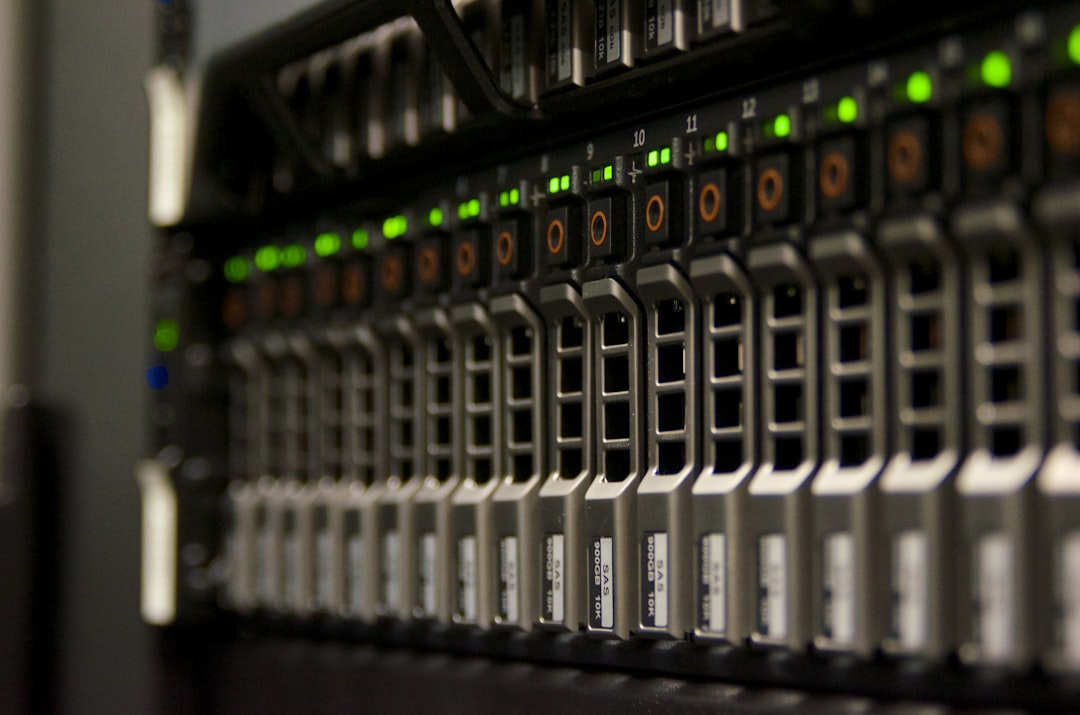
You’ve roughed-in rooms that look like this your whole career. Now learn why every cable path and cooling duct placement in that room is a compliance event, not just a coordination item.
Domain 2 — The Four Key Constraints: Power, Cooling, IT Connectivity, and Space
This is the core of the exam. Each constraint is its own sub-world.
Power: The hierarchy runs utility → transformer → switchgear → UPS → PDU → rack PDU. Know UPS topology: N (no redundancy), N+1 (one spare), 2N (fully redundant, two complete systems). Understand generator ATS logic and the 10–15 second transfer gap that UPS runtime must cover. Electricians, this is your panelboard hierarchy — just bigger, redundant, and mission-critical. The new vocabulary is wrapped around concepts you already own.
Cooling: CRAC units use direct expansion (DX) refrigerant circuits — same logic as your packaged rooftop unit, different nameplate, higher stakes. CRAH units use chilled water supplied by a central plant. Know hot aisle/cold aisle containment and why mixing them destroys your PUE (Power Usage Effectiveness) — the ratio of total facility power to IT load. HVAC techs have a native advantage in this domain. The framing shifts slightly, but the refrigerant logic doesn’t.
IT Connectivity: This is where tradespeople need the most new learning — don’t underestimate this domain. Structured cabling hierarchy, patch panel organization, fiber vs. copper in the data hall, and TOR switching (Top of Rack — the switch that aggregates all the servers in a single cabinet before connecting to the core network) are genuinely new material for most electricians and HVAC techs. Think of it this way: structured cabling is your home runs and branch circuits, and TOR switching is the sub-panel. It’s distribution logic for data, not electricity.
Space: Cabinet and rack U-space utilization (a rack unit, or "U," is 1.75 inches of vertical rack space), weight load planning for raised floors, cable management standards, and physical access control requirements. This domain is mostly common sense for anyone who’s done structured work in a finished facility — the CDCTP just formalizes it.
For the exam, understand how a failure in one constraint cascades into the others. A cooling failure creates a thermal event; that thermal event can trigger automatic IT load shutdown; that shutdown affects space utilization planning. Systems thinking is what separates a passing answer from a wrong one.
Domain 3 — Operational Policies, Procedures, and Compliance
The MAC process — Move, Adds & Changes — is the formal change management procedure for any physical modification to the data center environment. Every cable swap, every equipment addition, every rack reconfiguration goes through it. If you’ve worked under a formal LOTO program, you understand the spirit of this domain: document what you’re doing, get authorization, execute, verify.
The CDCTP adds a digital asset protection layer on top of that familiar framework. Permit-to-work systems in data centers manage contractor access and live-work authorization — same intent as lockout/tagout, with added layers for IT continuity. Know incident response, escalation protocols, and the difference between scheduled and emergency maintenance procedures, because the exam will test you on sequence, not just vocabulary.
Domain 4 — Legislation, Standards, and Codes of Conduct
You don’t need to cite section numbers. You need to know which standard governs which aspect of data center operations. IEC 62443 covers industrial cybersecurity for operational technology. ASHRAE A1–A4 thermal envelopes define acceptable inlet air temperature ranges for IT equipment — A1 is the tightest (68–77°F), A4 is the most permissive. EN 50600 is the European data center standard series — the EU equivalent framework.
Professional codes of conduct also live here: data confidentiality obligations, client site access ethics, and escalation responsibilities when you observe a safety or compliance issue. You already read NEC for electrical — this domain is the NEC equivalent for the full data center ecosystem. The names are different; the discipline is the same.
Domain 5 — Health, Safety, and Environmental Responsibilities
Zero competitors cover this domain. That’s their mistake, because Uptime weights it seriously.
Arc flash risk in data centers is elevated compared to standard commercial electrical work because shutdown is often not an option — you’re working in energized environments with equipment that cannot be de-energized without impacting live IT loads. Confined space considerations apply in raised-floor environments and ceiling plenums. Chemical handling is a real exam topic: VRLA battery electrolyte (sulfuric acid), refrigerant recovery compliance, and suppression agent exposure — FM-200, Novec 1230, and CO₂ systems all carry different exposure hazards and evacuation protocols.
Know which suppression agent your facility uses and what the NOAEL (No Observable Adverse Effect Level) exposure limit is for CO₂ systems specifically. Environmental obligations include e-waste handling procedures, refrigerant recovery documentation, and PUE reporting for facilities under sustainability mandates.
Understanding Uptime Institute CDCTP exam prep matters because it directly affects daily work and long-term outcomes.
Understanding Uptime Institute CDCTP exam prep matters because it directly affects daily work and long-term outcomes.
How Hard Is the CDCTP Exam for Someone Coming From the Trades?
Honest answer: not hard if you show up prepared. Hard if you show up cold. The five-day course is content-dense — they’re covering five domains in 40 hours of instruction, and the exam hits on Day 5 when your brain is tired. Showing up with pre-reading done isn’t a luxury; it’s a risk management decision.
The exam is closed-book, written, multiple-choice. It’s not asking you to design a Tier IV facility — it’s asking whether you can identify the right operational response in a given scenario. That framing matters. Study for application, not memorization.
The TradesmanPass Domain Translation Table
TradesmanPass Domain Translation Table — Analysis current as of May 2026
| Domain | Trades Background | Existing Knowledge Overlap | New Learning Required |
|---|---|---|---|
| Physical Infrastructure | All trades | High — layout, access, clearances | Uptime Tier I–IV framing |
| Power Constraint | Electricians: ~80% overlap | UPS, switchgear, load calc, ATS | Redundancy topology (2N, N+1, N+2) |
| Cooling Constraint | HVAC techs: ~75% overlap | CRAC/CRAH, chilled water, DX airflow | PUE concepts, containment compliance |
| IT Connectivity | All trades: ~20% overlap | Physical cable management basics | Structured cabling standards, TOR switching logic |
| Operational Procedures | All trades | Permit-to-work, LOTO parallels | MAC process, change management documentation |
| Legislation & Standards | All trades | NEC familiarity, code discipline | IEC 62443, EN 50600, ASHRAE A-class thermal mapping |
| Health & Safety | All trades | Arc flash, confined space awareness | Suppression agent handling, no-shutdown live work rules |
Where Tradespeople Typically Struggle — and How to Close the Gap
IT Connectivity is the universal gap domain. No amount of journeyman hours prepares you for structured cabling hierarchy, fiber connector types (LC vs. SC, OM3 vs. OM4 vs. OS2), or network topology basics — these are genuinely new material. Spend 2–3 evenings before the course on Uptime Institute’s free published white papers, BICSI’s free introductory structured cabling resources, and a basic "what is a TOR switch?" search. That’s 30 minutes, not a deep dive.
Operational documentation language is the second gap — MAC forms, change management tickets, and escalation procedures use IT-native vocabulary that doesn’t map directly from trades paperwork. During the course itself, ask the instructor to use trades analogies. Most CDCTP instructors know their audience and have the translations ready. If yours doesn’t, you have the table above.
The rest of the CDCTP course agenda will feel familiar. The parts that don’t are identifiable and closeable before Day 1. That’s the whole point of doing this Uptime Institute CDCTP exam prep work in advance.
Understanding Uptime Institute CDCTP exam prep matters because it directly affects daily work and long-term outcomes.
Understanding Uptime Institute CDCTP exam prep matters because it directly affects daily work and long-term outcomes.
How Much Does the CDCTP Cost in 2026 — and Is It Worth It?
The cost question dominates the PAA results for this cert. Here’s the straight answer, with the math a working tradesperson actually needs to run.
CDCTP Cost Breakdown: Course Fee, Exam, and Renewal
The CDCTP certification cost runs approximately $4,985 USD through Uptime Institute and authorized partners — verify with your specific provider before booking, because regional pricing varies. The exam fee is included in that number. There’s no separate Prometric appointment, no additional testing fee — you sit the exam on Day 5 of the course you already paid for. That’s actually better than how most competing certs work.
Renewal is CPD-based — Uptime Institute requires ongoing Continuing Professional Development credit accumulation; the credential doesn’t hard-expire as long as CPD requirements are met. Check with your state licensing board about whether CDCTP CPD hours count toward CE credit for your journeyman or master license — some jurisdictions allow it, and that’s found money. Employers like Equinix, Digital Realty, Iron Mountain, and NTT Global Data Centers regularly sponsor CDCTP for operations hires.
Featured photo by Avery Evans on Unsplash.
Related: More Uptime Institute CDCTP exam prep resources.
Frequently Asked Questions
What is the passing score for CDCP?
The post content provided doesn’t specify the exact passing score for the CDCTP exam. For accurate details on Uptime Institute CDCTP exam prep scoring requirements, contact Uptime Institute directly or check their official certification documentation, as passing scores may vary by exam version and are typically detailed in official study materials.
How much does it cost to become certified in the Uptime Institute?
CDCTP certification through Uptime Institute costs approximately $4,985 USD as of 2026, with the exam fee included. This covers the five-day instructor-led course—available in-person or virtual—plus the written exam administered on Day 5. No separate exam registration is required when enrolling through Uptime Institute or authorized partners.
How much does CDCP certification cost?
The CDCTP certification through Uptime Institute costs approximately $4,985 USD as of 2026. This price covers the five-day instructor-led course and the exam fee—no separate registration required. Authorized partners like CNet Training offer the same pricing for Uptime Institute CDCTP exam prep.
What is Tier 4 uptime requirements?
Tier 4 uptime requirements aren’t detailed in the CDCTP exam study materials provided. The Uptime Institute CDCTP exam covers data center infrastructure across five domains including physical systems and standards, but specific Tier classification metrics are covered within the broader Legislation & Standards domain rather than as standalone uptime percentages.